Blog
What Deadlifting 3x My Bodyweight Actually Taught Me
Why I Stopped Chasing Bigger Deadlifts
Several years ago, I decided to see how strong I could get.
I wasn't interested in becoming a lifelong powerlifter, but I was curious about what would happen if I dedicated myself to the sport and pursued a specific goal.
One of those goals was deadlifting three times my bodyweight.
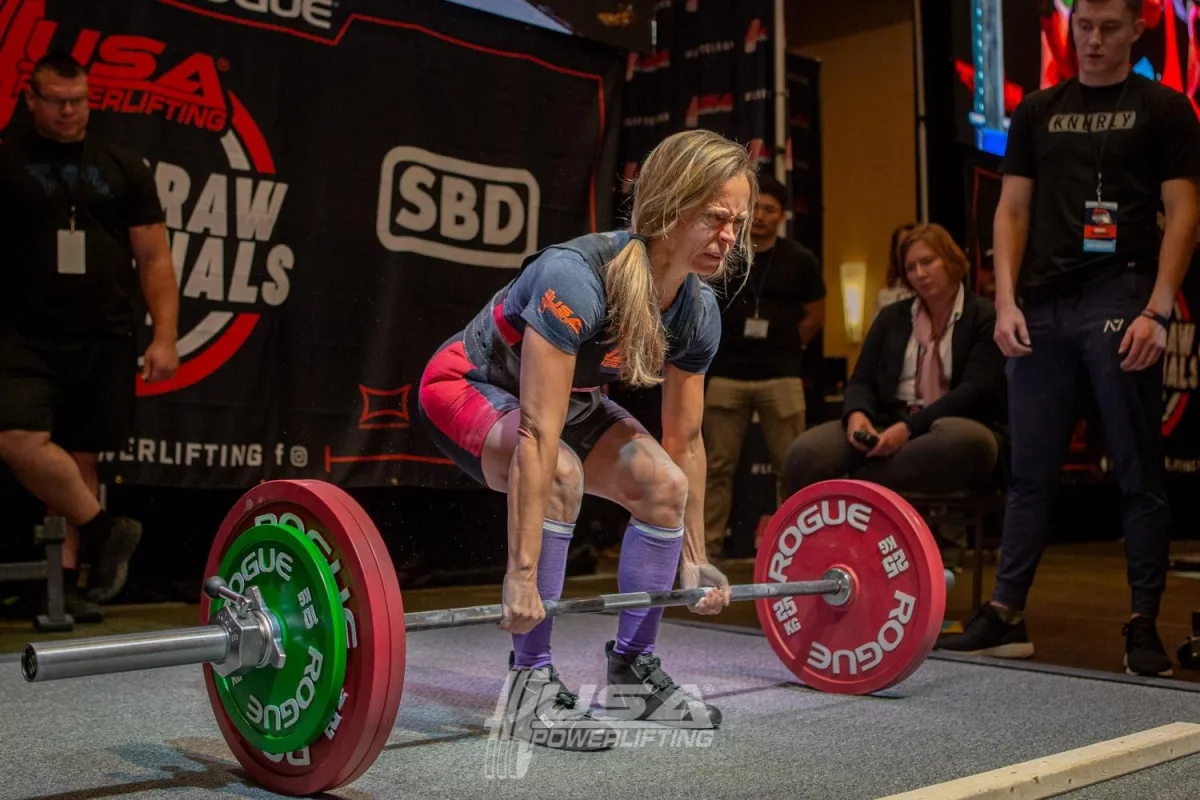
For a couple of years, I trained and competed in powerlifting, eventually qualifying for and competing at the national level. At Nationals, I competed in the 52kg weight class and weighed in at 50.85kg. My third deadlift attempt was 152.5kg, just over three times my bodyweight.
I still remember the feeling of locking it out.
I had accomplished exactly what I set out to do.
And shortly after, I retired from powerlifting.
That surprises people.
Why spend years pursuing a goal only to walk away after achieving it?
Because along the way, I learned something important about strength.
What Most People Didn't See
People saw the deadlift.
They didn't see everything that went into it.
Training was only part of the process.
I tracked food intake, meal prepped, prioritized sleep, managed stress, got regular massages, worked with a sports psychologist, and spent a significant amount of time on recovery work.
Looking back, preparing for that competition felt like having a second full-time job.
And while I trained alone, I wasn't really doing it alone.
I had the benefit of working remotely with Bill Hartman, one of the most thoughtful and forward-thinking coaches and mentors I've encountered. His work has had a profound impact not only on my own health and training, but also on how I think, learn, and coach others.
Having that level of guidance throughout the process made a real difference.
The experience taught me something that extends far beyond strength training.
Success is rarely about effort alone.
The right guidance matters too.
The Cost of Specialization
Powerlifting taught me discipline.
It taught me consistency.
It taught me how to stay committed to a long-term goal.
But it also taught me that every training approach creates specific adaptations.
To become a better powerlifter, I had to become more specialized.
I became stronger.
But I also became more rigid.
I lost some of my ability to rotate.
Recovery became increasingly important.
More and more of my time and energy went toward maximizing a single quality: maximal strength.
None of that was bad. In fact, it was necessary. Those adaptations helped me achieve the goal I was chasing.
But they also taught me something I still carry into my coaching today:
If you push one quality to an extreme, you'll get very good at that quality — but it may come at the expense of others.
A Different Question
Around that same time, COVID hit.
Like many people, I found myself reevaluating priorities.
I had achieved the goal I set out to accomplish, and for the first time I stepped back and asked myself:
What am I training for now?
The answer surprised me.
I wasn't interested in organizing my life around adding another five or ten pounds to a deadlift.
I wasn't interested in becoming more specialized.
I was interested in becoming more capable.
What Strength Means to Me Today
I still strength train. I still use barbells. I still believe strength is one of the most important qualities we can develop.
But my training looks different now.
I run. I hike. I move in more directions. I prioritize things I used to treat as afterthoughts.
I've traded specialization for adaptability.
And somewhere along the way, I stopped asking "how strong can I get?" and started asking something better:
What do I want my strength to allow me to do?
That question changed how I train. It changed how I coach.
And it might change things for you too.


Copyright © 2025 · KG STRENGTH & PERFORMANCE